Thursday, November 24, 2016

Crowding-Out

Crowding-Out


Definition: A situation when increased interest rates lead to a reduction in private investment spending such that it dampens the initial increase of total investment spending is called crowding out effect.

Simply put, The Federal Government spends more money than they have as revenue and to keep spending must borrow from the banks. How do they borrow? They sell Government Bonds. In selling these bonds cash is sucked out of the banks. Interest rates rise as there is less cash in the banks coupled with a larger demand for this cash. Rising interest rates slow the amount of investment in the economy.

The government has an expansionary policy and with its spending is trying to push AD aggregate demand higher, taking advantage of the multiplier. Spending raises interest rates that slows or even decreases (I) investment spending thus decreasing the effects of the multiplier.

Fiscal Policy Cheat Sheet here.


Lets look at examples of multiple choice questions:

2008 AP Multiple Choice
Answer - (decrease in private investment due to increased borrowing by the government)

2000 AP Multiple Choice
Answer - (C) higher interest rates decrease private sector investment

2005 AP Multiple Choice
Answer - (B) The decrease in consumption or private investment spending caused by an increase in government spending.

2010 AP Multiple Choice
Answer - (B) government borrowing to finance its spending decrease private sector investment.

1995 AP Multiple Choice
Answer - (A)
Tricky!
A tax cut is an expansionary fiscal policy. If the government decreases tax rates then it has less revenue. Less revenue means it must borrow to keep spending. The borrowing raises interest rates. Raising of interest rates will slow the amount of (I) investment which will keep GDP from increasing as much as expected, but it will increase. Just less than the government would have liked.

(Practice Question)
Answer - (B) Increasing the real interest rate

(Practise Question)
Answer - (C) Budget deficit increases

2010 FRQ#1


2010B FRQ#1


2008 FRQ#1
Blog post for 2008 FRQ#1 here.


Wednesday, November 23, 2016

Least-Cost Rule

Least-Cost Rule
The Resource Costs Cheat Sheet is here.

Least Cost Rule: production at least cost requires the ratio of labor’s marginal product to its price equals the ratio of capital’s marginal product to its price. The amounts of labor and capital employed must be adjusted, all the while keeping output constant, until this condition is achieved.

Simple, yes. (NO)  The least cost rule comes into affect when the college board asks us to evaluate two inputs for production. Labor and Capital,,, workers and machines. 


We are usually given two inputs, (labor and capital) and asked to evaluate which we need to buy more. 

First - Let's create our own simple problem. 

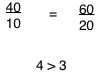
The price of labor is $10 and the price (rent) on capital is $20. The marginal product of labor is 40 and the marginal product of capital is 60. Should we hire more labor or more capital?

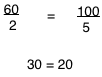
Remember the formula:

Set up the numbers:

What does this mean: 
The marginal product of the last input of labor was 40 units produced and that labourer was paid $10. So for each $1 spent we received 4 units produced. 40/10 = 4
&
The marginal product of the last input of capital was 60 units produced and the rent was $20. So for each $1 spent we received 3 units produced. 60/20 = 3

Answer - Obviously we would want to hire more labor as (per dollar spent) on labourers produce a higher level of output. We want the biggest bang for the buck.

This is the simplest most straight forward way of presenting these problems don't expect it.
The legend of John Henry stands strong in American Folklore. Legend has it that Henry’s prowess as a steel driver was measured in a race against the new steam powered hammers being used to drill into rock to make holes for explosives to blast tunnels for the railroad back in the late 1800’s. In a battle of man versus machine, Henry outdueled the steam powered technology, only to die in victory with his hammer in his hands as his heart gave out from the stress. Where it actually happened, or if it even happened at all, will always be in debate but the legend will always be a firm reminder of how technology finds itself taking over tasks previously done by hand.

(2012 AP Multiple Choice)

Answer - (A) The marginal product per dollar spent on labor is equal to the marginal product per dollar spent on capital.

2000 AP Multiple Choice Question

To answer this question you must understand that the Profit Max rule is about setting the ratios equal to one. There is a point where the right combination of labor and capital is maximised, this is always at the profit max (MR=MC) point on our graphs.  If we are at Profit Max then the least cost rule is attained/satisfied.

Lets plug in some numbers: for answer (A)
This combination of capital and labor we would want to hire more labor.


Lets plug in the numbers for (E)
Answer (E) Both sides (ratios) equal each other. We are at profit max = least cost combination.

2008 AP Multiple Choice Question

Formula:
or
OK, so we can see clearly that we would want to hire more (increase) labor as the output per dollar is greater for labor. But, the confusion is should we choose answer (D) or (E).

The marginal product of the last input of labor was 40 units produced and that labourer was paid $10. So for each $1 spent we received 4 units produced. 40/10 = 4
If we increase the amount of labor we hire the MP will fall due to diminishing marginal returns. 

&
The marginal product of the last input of capital was 60 units produced and the rent was $20. So for each $1 spent we received 3 units produced. 60/20 = 3
If we decrease the amount of capital we hire the MP will rise due to increasing marginal returns.

Remember, it is the least-cost rule, we want the least inputs we can hire(rent) to get to profit max. 

Answer - (E) Increase labor and decrease capital.

(Practise Problem)


Answer (A) make no changes as the mix of inputs (last dollar spent yield the same marginal product)

(Practise Problem)

Answer (D) less labor and more capital.

 (FRQ Practise)
then...

or
(10,000/1,000) = (50/w)
(W = 5)


Monday, November 21, 2016

2009 B Microeconomics FRQ #1

2009 B Microeconomics FRQ #1


Watch me anser it here

(A) Draw a CLG for Mary & Company and show each of the following.

(i) The profit max output and price, labelled as Qm & Pm respectively.

(ii) The area of loss shaded completely.


(B) What must be true in the short run for the company to continue at a loss?

Memorise this phrase, " In order for a company to continue operation at a loss it must be covering its variable costs (labor). You will see this again.


(C) Assume now that the demand for cleaning products increases and that the company is not earning short-run economic profits. relative to this short-run situation, how does each of the following change in the long-run.

(i) The number of firms.

Increase - In the long-run more firms will enter the market as profits attract firms.

(ii) The company's profit.

Decrease - In the long run the firm will be in long-run equilibrium making zero economic profit.

(D) In the long-run if the company continues to produce, will it produce the allocatively efficient level of output? Explain.

Remember that the industry is a monopolistically competitive industry, 
In the long-run the allocatively efficient level of output will not be produced. 

Monopolistic Competition Cheat Sheet is here.


(E) In  the long-run will the company be operating in the region where 
economies of scales (EOS) exist.
Absolutely - 
First, You must know what economies of scales looks like. Economies of Scale is the left half of the LRATC curve. It means that even though quantity in the industry is increasing costs for those resources are falling. 

EOS post is here.

Now, look closely at the graph you were to have drawn and notice 

Even when the firm is in long-run equilibrium it will still be operating in the downward sloping section of the ATC and therefore in the EOS region.