2015 AP Macroeconomics FRQ #1
Crying because he waited and crammed for the AP
and now recognises that it is just to much information.
(A) Economy is operating below full employment,,, Draw a CLG of LRAS, SRAS, AD.
You must understand that below full employment means a recession graph.
(B) Assume the FED targets a new Federal Funds Rate to reach full employment. Should the Federal Reserve target a higher or lower Federal Funds Rate?
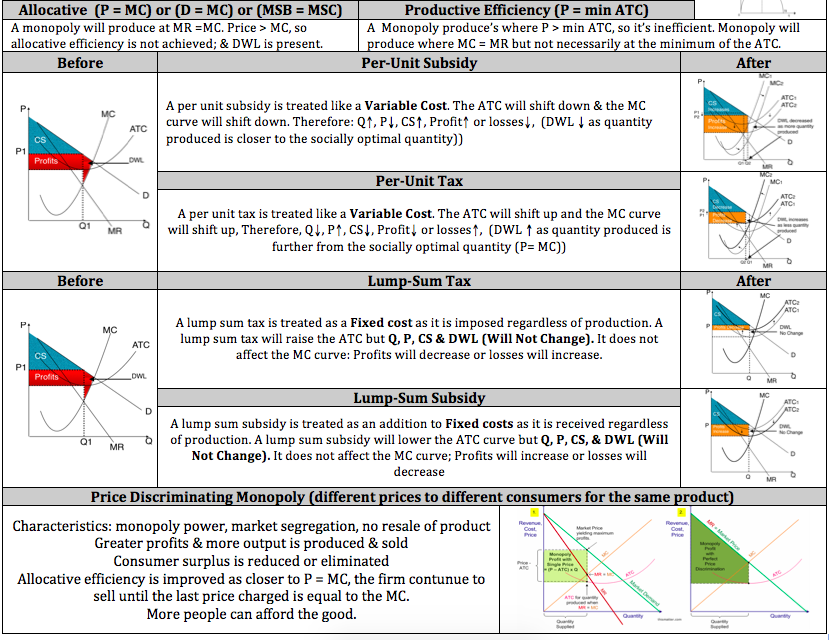
1st you need to know what the FED funds rate is, so,, of the cheat sheet.
A lower Fed. Funds rate will entice banks to borrow and loan money at a cheaper rate. This will stimulate more loaning in the economy thus more money creation and therefore will ultimately push AD higher toward full employment.
Answer - One point is earned for stating that the Federal Reserve should target a lower federal funds rate.
(C) Draw a graph of the Money market (nominal interest rates) and the effect that part B had on it,
A lower federal funds rate will increase the level of borrowing between banks and more money creation will occur increasing the MS (money supply) which will lower the nominal interest rates.
Answer -
(D) The policy makers pursue a fiscal policy rather than a monetary policy in part (B). Assume that the marginal propensity to consume is 0.8 and the value of the recessionary gap is $300billion.
(i) If the government changes its spending without changing taxes to eliminate the recessionary gap, calculate the minimum change in spending that is required.
So if the MPC is 0.8 the multiplier is 5
You have to know these formulas.
If the MPC is 0.8 then the MPS is 0.2 as they both together must = 1
So, 1/0.2 = 5,, the multiplier is 5
This means that the amount that government spends to correct the recession will be multiplied by 5.
If there is a 300b recessionary gap,, the government must spend 60 billion dollars
because 60b X 5 = 300b.
Answer - One point is earned for calculating the minimum required change in government spending:$60 billion ($300/5=$60)
(ii) If the government changes taxes with our changing spending to eliminate the recessionary gap, will the minimum required change in taxes be higher, lower or the same as the change in government spending in part (D)(i)?
If unclear about the difference between the spending and the taxing multipliers then check out this blog post that specifically addresses the issue.
If the government doesn't want to increase spending (expansionary policy) it can reduce taxes (expansionary policy) but it will have to decrease taxes by more than 60b.
Why? To reduce taxes by 60b does mean that 60b of disposable income is now available to be spent by consumers but but but some of that 60b will be saved and thus leaked out of the economy, thus reducing the multiplying of the amount.
Answer - One point is earned for stating that the minimum required change in taxes will be greater than the minimum required change in government spending. One point is earned for explaining that the tax multiplier (mpc/mps = 0.8/0.2 = 4) is smaller than the government spending multiplier (1/mps = 1/0.2 = 5) because part of the initial increase in
disposable income caused by the decrease in income tax will be saved rather than spent.
(E) Assume the government lowers income taxes to eliminate the recessionary gap. Will each of the following increase, decrease or stay the same?
(i) AD explain.
AD will increase. Obviously if the government reduces taxes citizen's disposable income will increase and therefor consumption and investment will increase driving AD up.
Answer - One point is earned for stating that aggregate demand will increase and for explaining that lower income tax rates will increase disposable income and/or consumption and investment.
(ii) Long Run Aggregate Supply, Explain
(Answer 1) Long run aggregate supply will not be affected (stay the same) as in the future government will have to borrow to make up the lack of tax revenue that cutting taxes cost. This scenario never assumes that government would cut taxes spending as governments never do.
Think of the LRAS (Long run aggregate supply) curve as the PPC curve,, what shifts the PPC outward is Technology, population, more resources found or trade. People having money not taken from them (taxes) doesn't change the fact that government would have spent that money also.
Arguments aside,, (we must) if the citizens spend the money or the government does,, won't affect the LRAS curve.
Answer 1 - One point is earned for stating that long-run aggregate supply will stay the same because lowering income taxes will increase consumption and/or investment, or there is no change in inputs.
(Understand that I like answer 1 the best,,, but find the one you understand the best)
(Answer 2) Long run aggregate supply will (increase) as with reduction in taxes, disposable incomes will increase causing more consumption and investment into capital intensive projects, (think technology) and therefore people working smarter and producing more per capita,,, shifting out of the PPC.
Answer 2 - One point is earned for stating that long-run aggregate supply will (increase) in the long run because
lowering taxes will increase savings and investment in physical capital, or because of increased
incentives to work.
(Answer 3) Long run aggregate supply will (Decrease) as in the future government will have to borrow to make up the lack of tax revenue that cutting taxes cost. This scenario never assumes that government would cut taxes spending as governments never do. If the government borrows to make up the difference in tax cuts then interest rates rise discouraging investment and consumption (crowding out).
Answer 3 - One point is earned for stating that long-run aggregate supply will (decrease) in the long run
because lowering taxes leads to a crowding out of private investment.
 |
| Studied like a boss and got a 5 |